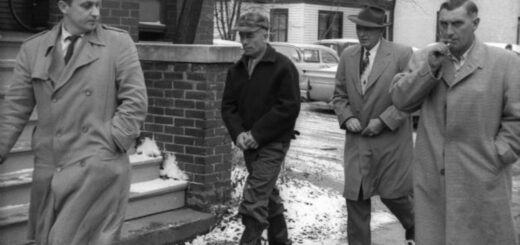
The True Story Behind MONSTER: The Ed Gein Story: The Man Who Became a Horror Icon
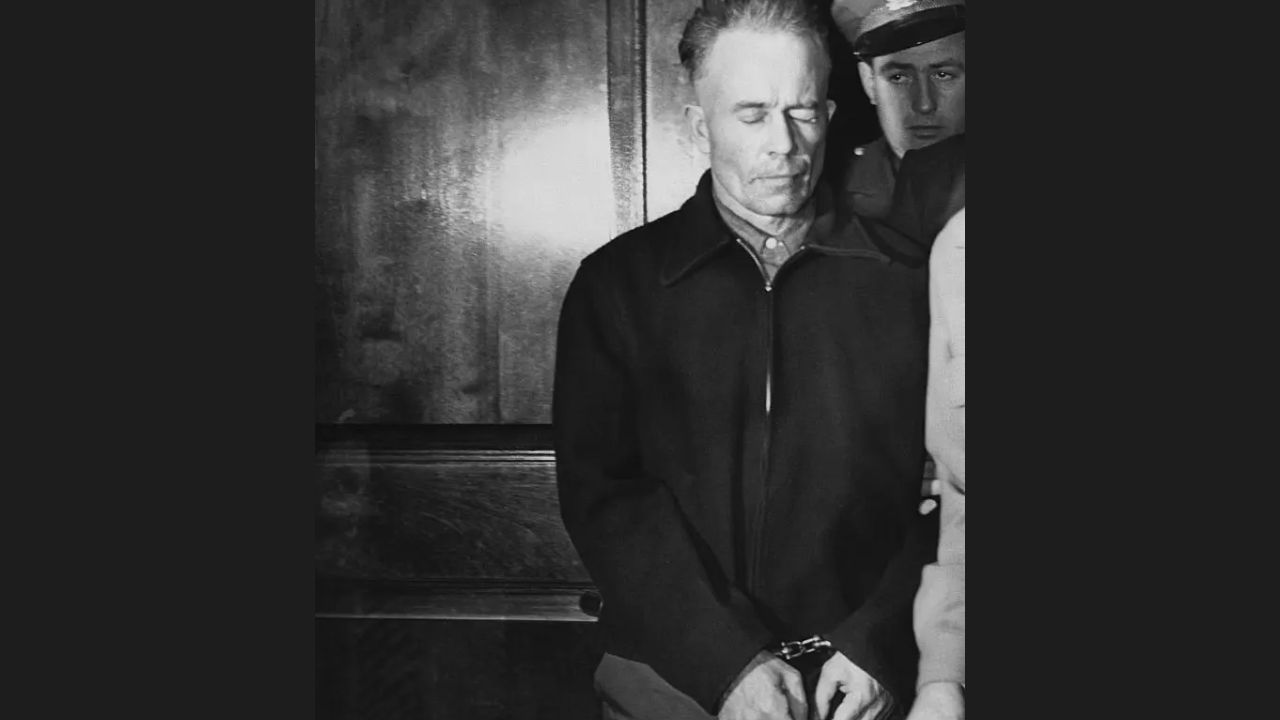
Key Takeaways
- Ed Gein, known as 'The Plainfield Ghoul,' committed two confirmed murders and is infamous for his gruesome acts in the 1950s, which influenced the horror genre.
- Gein's troubled childhood, characterized by a domineering mother and isolation on a rural farm, played a significant role in shaping his psychological development and future crimes.
Ed Gein remains one of America’s most infamous and influential criminals, a man whose gruesome acts in 1950s Wisconsin would fundamentally reshape the horror genre and our cultural understanding of serial killers . Dubbed “The Plainfield Ghoul” and “The Butcher of Plainfield,” Gein’s confirmed crimes included two murders, yet the discovery of his “house of horrors” revealed a level of depravity that shocked the nation and continues to fascinate decades later . The new Netflix series MONSTER: The Ed Gein Story, starring Charlie Hunnam as the titular killer, represents the latest exploration of this deeply disturbed individual whose legacy spawned some of Hollywood’s most iconic horror films .
This comprehensive examination delves beyond the sensationalism to uncover the tragic circumstances and psychological forces that transformed an isolated Wisconsin farm boy into the blueprint for modern horror villains. From his domineering mother to the shocking discoveries at his decrepit farmhouse, we trace the complete story of Ed Gein and examine why his case continues to resonate in our collective consciousness.
The Making of a Monster: Gein’s Troubled Early Life
Childhood Isolation and Religious Fanaticism
Edward Theodore Gein was born on August 27, 1906, in La Crosse County, Wisconsin, the second son of George Philip Gein and Augusta Wilhelmine Gein . His mother, Augusta Gein, was a fervently religious woman who dominated the household with her extreme beliefs and apocalyptic worldview . She frequently preached to her sons about the innate immorality of the world, reserving special condemnation for women, whom she considered “naturally promiscuous and instruments of the devil” . Augusta would read to her children from the Bible every afternoon, particularly favoring violent passages from the Old Testament and Book of Revelation that focused on death, murder, and divine retribution .
The family’s move to a 155-acre isolated farm in Plainfield, Wisconsin, further severed the Gein children from normal social development . Augusta exploited this isolation, actively turning away outsiders who might influence her sons while keeping them occupied with endless chores . This environment prevented Ed from forming normal peer relationships, with classmates and teachers remembering him as shy with strange mannerisms, including seemingly random laughter as if responding to private jokes .
A Household of Contradictions and Abuse
The Gein household presented a study in contradictory influences that would profoundly shape Ed’s psychological development:
- Paternal Abuse: Gein’s father, George, was a violent alcoholic who regularly beat both of his sons . These physical assaults were severe enough that Ed later reported they caused his ears to ring when his father struck him on the head .
- Maternal Domination: Augusta maintained iron control over her sons while simultaneously expressing contempt toward them . In particularly cruel moments, she would tell Ed, “I should have castrated you at birth,” embedding deep shame and warped attachment in the developing boy .
- Sibling Rivalry: Ed’s older brother Henry began challenging their mother’s influence as he reached adulthood, dating a divorced mother and planning to move in with her . Henry often spoke ill of Augusta around Ed, creating tension between the brothers .
Tragic Losses and Growing Isolation
The series of deaths that struck the Gein family would prove catastrophic to Ed’s fragile psyche:
- Father’s Death: On April 1, 1940, George Gein died of heart failure at age 66 .
- Brother’s Mysterious Death: On May 16, 1944, while the brothers were burning marsh vegetation on their property, Henry died under suspicious circumstances . His body was found face-down with bruises on his head, though authorities officially listed asphyxiation as the cause of death without performing an autopsy . Some investigators later speculated that Ed may have killed his brother during an argument about their mother .
- Mother’s Devastating Passing: Augusta suffered a series of strokes after Henry’s death and died on December 29, 1945 . Gein was utterly devastated by the loss of the woman who had been his entire world, what biographer Harold Schechter described as losing “his only friend and one true love” .
Descent Into Madness: The Crimes of Ed Gein
The House of Horrors
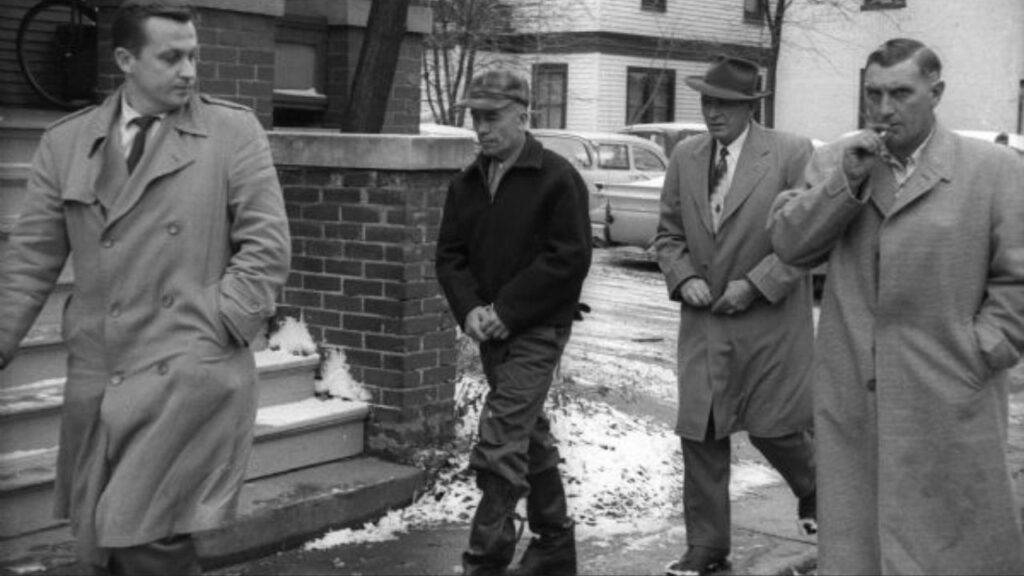
After his mother’s death, Gein’s behavior grew increasingly disturbed. He boarded up the rooms his mother had used, maintaining them as pristine shrines while the rest of the house descended into squalor . He lived in a single small room next to the kitchen, surrounded by growing madness . During this period, Gein developed obsessions with reading about cannibals and Nazi atrocities, particularly fascinated by Ilse Koch, “the Beast of Buchenwald,” who was accused of making lampshades from human skin .
Between approximately 1947 and 1957, Gein began visiting local cemeteries, excavating recently buried bodies of women who reminded him of his mother . He later confessed to robbing at least nine graves, sometimes taking entire corpses or select body parts . These grisly activities went undetected for years, with Gein maintaining his facade as a harmless oddball who did odd jobs around Plainfield .
The Murders
While Gein’s grave robbing provided him with human remains, he eventually escalated to murder:
- Mary Hogan: In 1954, Gein confessed to killing the 54-year-old tavern owner . He shot her with a .22 caliber rifle in her tavern .
- Bernice Worden: On November 16, 1957, Gein murdered the 58-year-old hardware store owner . Her disappearance prompted an investigation led by her son, Deputy Sheriff Frank Worden, who recalled that Gein had been in the store the previous evening and was expected to return for antifreeze .
Related Stories
Where Is Marcela Borges Now? The True Story Behind Netflix’s ‘Terror Comes Knocking’

Unraveling the True Story Behind Unknown Number Netflix

The Shocking Discovery
When authorities searched Gein’s farmhouse following Worden’s disappearance, they uncovered what TIME magazine called “one of the century’s most gruesome criminal cases” . The discoveries inside the decrepit farmhouse were so horrific they redefined American understanding of criminal deviance:
- Bernice Worden’s decapitated and disemboweled body hung upside down in a shed, “dressed out like a deer” .
- A wastebasket made of human skin .
- Human skin covering several chairs .
- Human skulls mounted on bedposts .
- Bowls made from human skulls .
- A corset made from a female torso skinned from shoulders to waist .
- Masks made from the skin of female heads, including one created from Mary Hogan’s face .
- A belt made from female human nipples .
- A lampshade made from the skin of a human face .
- A shoebox containing nine vulvas .
- Bernice Worden’s heart in a plastic bag placed before Gein’s potbelly stove .
Perhaps most infamous was the partially assembled “woman suit” created from human skin, which Gein apparently intended to wear as a way to transform himself into his mother . As author Katherine Ramsland noted, this was Gein’s attempt to “become his mother—to literally crawl into her skin” .
Trial, Incarceration, and Death
Legal Proceedings and Mental Health Evaluation
Following his arrest, Gein was diagnosed with schizophrenia and found unfit to stand trial . He claimed that he was in a daze when he committed his crimes and described a “force built up in me” that drove his actions . Psychiatrists at the time believed he was cutting up women who reminded him of his deceased mother both to “bring her back to life and have her with him always, and to destroy her as the cause of his frustration” .
Gein was initially confined to mental health facilities, but by 1968 was judged competent to stand trial . He was found guilty of the murder of Bernice Worden but was declared legally insane and remanded to psychiatric institutions for the remainder of his life .
Later Life and Death
Gein spent his remaining years at the Mendota Mental Health Institute, where he remained until his death from respiratory failure caused by lung cancer on July 26, 1984, at age 77 . He was buried in an unmarked grave in Plainfield Cemetery next to his family members .
Cultural Legacy: The Gein Influence on Horror
Ed Gein’s impact on popular culture, particularly the horror genre, is arguably more significant than that of any other criminal. His crimes served as the direct inspiration for multiple iconic horror properties:
- Psycho (1960): Robert Bloch’s novel and Alfred Hitchcock’s subsequent film adaptation drew heavily from Gein’s story, particularly the domineering mother motif . The character of Norman Bates, a quiet motel owner with a taxidermy hobby and unhealthy maternal relationship, directly mirrors aspects of Gein’s psychology .
- The Texas Chain Saw Massacre (1974): The film’s villain Leatherface, who wears masks of human skin and lives with his family in a house of horrors, borrows extensively from details of Gein’s life and crimes .
- The Silence of the Lambs (1991): The character Buffalo Bill, who kidnaps women to create a “woman suit” from their skin, directly references Gein’s most infamous activity .
This cultural legacy forms a central narrative thread in MONSTER: The Ed Gein Story, which features Tom Hollander as Alfred Hitchcock and Joey Pollari as Anthony Perkins . The series explores how Gein’s crimes “birthed a new kind of monster that would haunt Hollywood for decades” .
MONSTER: The Ed Gein Story – The Netflix Adaptation
Cast and Characterization
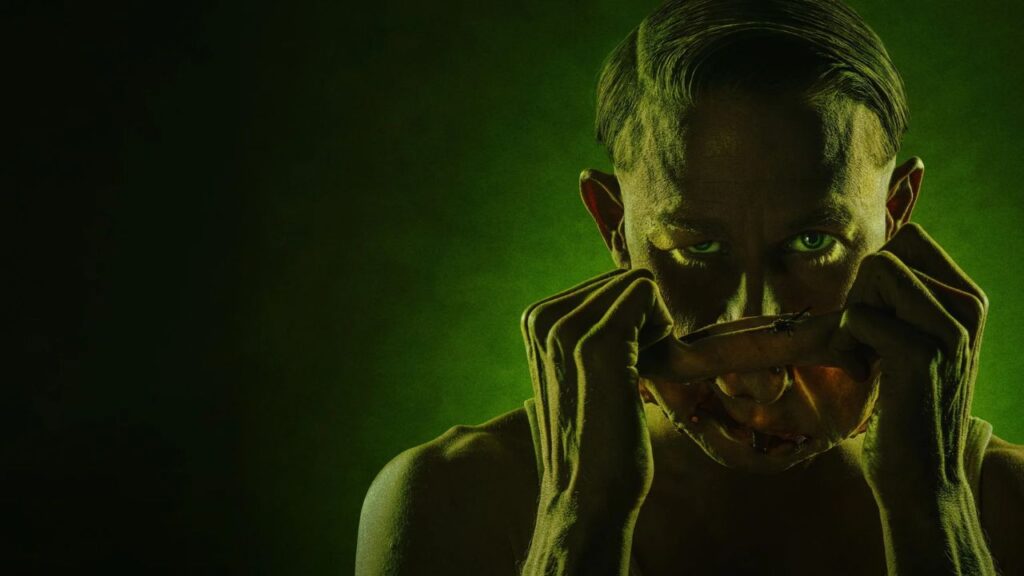
The Netflix series represents the third installment in Ryan Murphy and Ian Brennan’s true crime anthology, following seasons focused on Jeffrey Dahmer and the Menendez brothers . The casting and approach to depicting Gein’s story demonstrate a nuanced understanding of the complex psychology behind the crimes:
- Charlie Hunnam as Ed Gein: Hunnam underwent a significant physical transformation, losing nearly 30 pounds to capture Gein’s slender frame . The actor researched extensively, discovering that Gein’s distinctive high-pitched voice was actually “an affectation” rather than his natural voice—something Gein adopted because “it was what Ed thought that his mother wanted him to be” .
- Laurie Metcalf as Augusta Gein: Metcalf portrays Gein’s domineering mother, whose psychological influence shaped his descent into madness . Co-creator Ian Brennan described Metcalf as “as close to a theater goddess actually exists in real life” .
- Supporting Cast: The series features an ensemble including Suzanna Son as Adeline Watkins (a woman romantically involved with Gein), Vicky Krieps as Ilse Koch (the Nazi war criminal who fascinated Gein), and Lesley Manville as Bernice Worden (one of Gein’s victims) .
Narrative Approach and Themes
Rather than focusing exclusively on the gruesome details of Gein’s crimes, the series positions itself as a psychological character study that explores how “monsters aren’t born, they’re made… by us” . The season’s official synopsis describes Gein as “the blueprint for modern horror” , emphasizing his enduring cultural impact.
The eight-episode season, released on October 3, 2025, employs a complex narrative structure that interweaves multiple timelines and perspectives . Episode titles like “Mother!”, “Sick as Your Secrets,” and “The Godfather” suggest an exploration of both Gein’s personal psychology and his cultural legacy .
Conclusion: The Enduring Fascination with Ed Gein
The story of Ed Gein continues to captivate because it represents more than just a series of gruesome crimes—it serves as a dark mirror reflecting our societal anxieties about isolation, mental illness, and the nature of evil. As criminology professor James Alan Fox notes, “There are a lot of other cases that are bizarre in one dimension or another, but this had the whole smorgasbord” .
The central question surrounding Gein—“Are monsters born or made?”—remains unresolved and continues to provoke debate . Fox suggests the answer lies somewhere in between: “We do have different propensities, but within those propensities, no one is a born murderer… There’s the whole idea of the ‘bad seed.’ Well, there’s also bad watering” .
MONSTER: The Ed Gein Story represents the latest chapter in this ongoing fascination, inviting viewers to look beyond the sensational headlines and confront the uncomfortable reality that monsters may not be supernatural creatures, but ordinary individuals shaped by extraordinary circumstances. As Gein himself remarks to the camera in the series, “You’re the ones who can’t look away” —an accusation that challenges our collective complicity in the true crime phenomenon that has made figures like Ed Gein into perverse cultural icons.
FAQs:
Q1: Is Monster: The Ed Gein Story based on a true story?
Yes, it dramatizes the life and crimes of real-life murderer Ed Gein.
Q2: What inspired horror films like Psycho and Texas Chainsaw Massacre?
Ed Gein’s crimes were the direct inspiration behind these characters.
Q3: Should I watch this Netflix series?
Watch it if you’re interested in psychological true crime and horror origins — but expect extremely disturbing content.
About The Author