Katie Thurston shares hopeful progress in her breast cancer fight

Katie Thurston said her tumors are getting smaller. This happened after three months of targeted therapy and hormone treatment. She called this “amazing news” and felt very relieved. Her reaction is special because most people with the same diagnosis only try to manage symptoms. They do not often see their tumors shrink.
Katie Thurston’s Treatment Progress

Tumor Shrinkage
Katie Thurston said her tumors are shrinking after three months of targeted therapy and hormone treatment. This is not common, since most people with metastatic breast cancer only try to control symptoms. They do not usually see their tumors get smaller. Her good results are what doctors hope for in hormone receptor-positive metastatic breast cancer. Hormone therapies and targeted agents can help control the disease for a long time.
- Dr. Erica Mayer says hormone medicines with targeted therapies work better and are easier to handle than chemotherapy.
- The main goal for metastatic cancer is to manage it, not cure it.
- Katie Thurston’s treatment plan is standard for her cancer type, which helps control the disease and improve life quality.
Her progress gives hope to others with similar diagnoses.
Hormone Therapy
Katie Thurston is getting hormone-blocking therapy with Letrozole, Kisqali, and at first Zoladex for HER2-negative, hormone-positive metastatic breast cancer. When Zoladex did not stop her ovaries, her doctors changed her medicine to Lupron. These drugs are often used for stage 4 metastatic breast cancer.
| Hormone Therapy Type | Common Drugs/Agents | Usage Context | Documented Effectiveness |
|---|---|---|---|
| Aromatase Inhibitors | Exemestane, Letrozole, Anastrozole | First-line hormonal treatment in postmenopausal women with hormone receptor-positive metastatic breast cancer | Shown to slow tumor growth and improve progression-free survival in clinical trials |
| Selective Estrogen Receptor Modulators (SERMs) | Tamoxifen | Used in hormone receptor-positive metastatic breast cancer | Effective in blocking estrogen effects on tumor cells; studied in clinical trials for metastatic breast cancer |
| Selective Estrogen Receptor Degraders (SERDs) | Fulvestrant | Used after progression on aromatase inhibitors or as alternative hormonal therapy | Demonstrated efficacy in improving outcomes post-AI therapy |
| Combination Therapies | Letrozole + Goserelin, Letrozole + Dasatinib, Fulvestrant + Capivasertib or Venetoclax | Under investigation in clinical trials to enhance outcomes | Some combinations improve progression-free survival; ongoing trials assess safety and efficacy |
New treatments, like oral SERDs such as elacestrant and combination therapies with CDK4/6 inhibitors, are helping patients more. These medicines block estrogen receptors, slow tumor growth, and help people live longer without the cancer getting worse.
Read Full Article : John Leguizamo Sparks Debate After Blasting Dean Cain’s ICE Involvement in 2025
Side Effects
Hormone-blocking therapy can cause many side effects. Katie Thurston has talked about her memory loss and losing a lot of hair. These problems are common. Many people have “brain fog,” which means they forget things and have trouble focusing. Hair loss can make people feel bad about themselves and less motivated to keep going with treatment.
- Common side effects are hot flashes, tiredness, joint pain, mood changes, and weight gain.
- Some treatments can cause bone and muscle pain or hurt where the shot is given.
- Side effects can make daily life hard, like working, keeping up with friends, or staying active.
“Some days, the tiredness and memory problems make even easy tasks feel too hard,” Katie Thurston told her followers.
Even with these problems, many people, including Katie Thurston, find ways to cope. Gentle exercise, being mindful, and support from loved ones can help with symptoms. Talking openly with doctors and nurses also helps people stick with treatment and feel better.
Katie Thurston’s honesty about her journey helps others learn and feel supported. Patient advocates like her teach the public, encourage early detection, and push for better care. By sharing her ups and downs, she helps others feel less alone and stronger when facing their own challenges.
Diagnosis and Next Steps

Early-Onset and Stage 4
Katie Thurston found out she has early-onset, stage 4 metastatic breast cancer. Her cancer is hormone receptor-positive and HER2-negative. The tumors have spread to her liver. In the United States, about 6% of breast cancer cases are stage 4 when found. The five-year survival rate for all stage 4 breast cancer is about 31%. For younger people, the rate is higher at 42.1%. If the cancer spreads to the liver, the rate drops to 7.34%.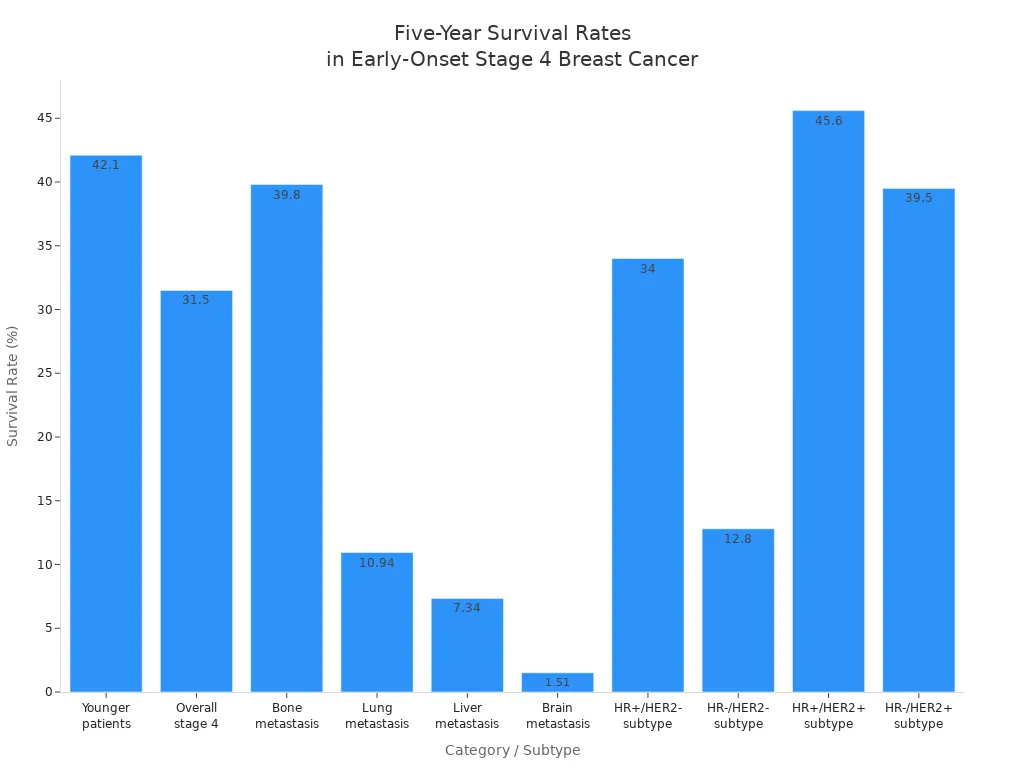
| Subtype/Metastasis Location | Five-Year Survival Rate (%) |
|---|---|
| Younger patients (early-onset) | 42.1 |
| Overall stage 4 breast cancer | 31-32 |
| Liver metastasis | 7.34 |
| HR+/HER2- subtype | 34 |
Future Plans
Katie Thurston will need treatment for the rest of her life. Doctors use hormone therapy, targeted therapy, and checkups to manage her cancer. She will have surgery soon, called a double mastectomy, to help with symptoms and lower risk. Her doctors change her treatments if her body needs something different. Supportive care, like eating healthy and physical therapy, helps her stay strong. She is also planning her wedding. This big event gives her hope and support while she fights cancer. Many people feel happy and loved during special events, even when things are hard.
Emotional Journey
Katie Thurston is very strong emotionally. She talks about her story to help others feel less alone. She stays hopeful and positive. Studies show that being positive and having support helps people with metastatic breast cancer. Support groups, therapy, and sharing stories help people handle stress and find meaning. Katie Thurston’s work inspires others to stay hopeful and get help. Her story shows how important friends, family, and feelings are in cancer care.
Katie Thurston’s progress shows how important personal treatment is. Getting help from others also matters a lot. Things like tumor type and therapy choice change results for metastatic breast cancer. Support groups can help people feel better and do well. Readers will get more news about new treatments and patient support. There will be updates on resources for people with the same problems.
FAQ
How does Katie Thurston manage side effects from treatment?
Katie Thurston does gentle exercise to help her body. She uses mindfulness to calm her mind. Her loved ones give her support every day. She talks with her doctors often. They change her care to help her feel better.
What is hormone-blocking therapy?
| Therapy Type | Purpose | Example Drug |
|---|---|---|
| Aromatase Inhibitor | Stops estrogen | Letrozole |
| CDK4/6 Inhibitor | Slows cell growth | Kisqali |
Will Katie Thurston continue sharing updates?
Katie Thurston will keep telling her story. She wants people to learn about breast cancer. She hopes to help others who have the same problems.
About The Author