
The Time That Remains Review: Eternal Love’s Bittersweet Curse in Netflix’s Vampire Romance Stream or Skip It?

What price would you pay for a love that spans lifetimes? This haunting Filipino romance explores the devastating beauty of mortality against the backdrop of eternal life.
In the crowded landscape of supernatural romance, Netflix’s The Time That Remains (2025) emerges as a distinctly Filipino take on the vampire genre, weaving together historical trauma, ageless love, and Gothic atmosphere into a compelling narrative that asks profound questions about life, death, and what makes our limited time meaningful. This isn’t just another vampire romance—it’s a meditation on how love transforms when one partner ages while the other remains forever young, set against the rich tapestry of Philippine history and folklore. While the film stumbles in some aspects of execution, its ambitious storytelling and emotional core make it a noteworthy addition to the global supernatural romance canon .
The Plot: A Love Story Spanning Decades
The Framing Device: A Hospital Bed Confession
The film opens with elderly Lilia (Bing Pimentel) recovering in a hospital after being shot during a robbery at her home. As she forms a bond with her nurse Isabela, she begins recounting the extraordinary story of her life with Matias (Carlo Aquino)—her mysterious, ageless lover who visits her regularly. Through these conversations, we learn that Lilia and Matias have been intertwined since her childhood during the Japanese occupation of the Philippines, with Matias possessing the ability to transform into a cat and never aging .
The Central Mystery and Conflict
Parallel to Lilia’s recollections, police officer Angua investigates a series of deaths connected to the robbery at Lilia’s home. Having pursued a serial killer case for decades, Angua has gathered evidence suggesting that while Lilia ages normally, her companion Matias has remained unchanged for years. This puts Matias at a critical juncture: flee to evade capture or stay by Lilia’s side as she potentially takes her final breaths .
Narrative Structure: Weaving Through Time
The Time That Remains employs a non-linear narrative that moves seamlessly between three primary timelines:
- 1940s-1950s: Lilia’s childhood during the Japanese occupation, where she first encounters Matias and witnesses his protective nature
- 1970s-1980s: Lilia’s troubled marriage to Isagani and Matias’s violent interventions on her behalf
- Present Day: Lilia’s hospitalization and the police investigation closing in on Matias
This structural approach allows the film to explore how the relationship between Lilia and Matias evolves over decades, with Matias consistently appearing as a protector figure whenever Lilia faces danger or trauma .
Character Analysis: The Mortal and The Eternal

Lilia: Embracing Mortality
Bing Pimentel delivers a powerful performance as the elderly Lilia, portraying a woman who has experienced tremendous loss and trauma yet maintains her agency until the end. What makes Lilia particularly intriguing is her consistent rejection of immortality—despite her deep love for Matias, she repeatedly chooses mortality, understanding the curse that eternal life represents . Her character embodies the film’s central theme: that life’s meaning derives from its finiteness, not its duration.
Matias: The Tortured Protector
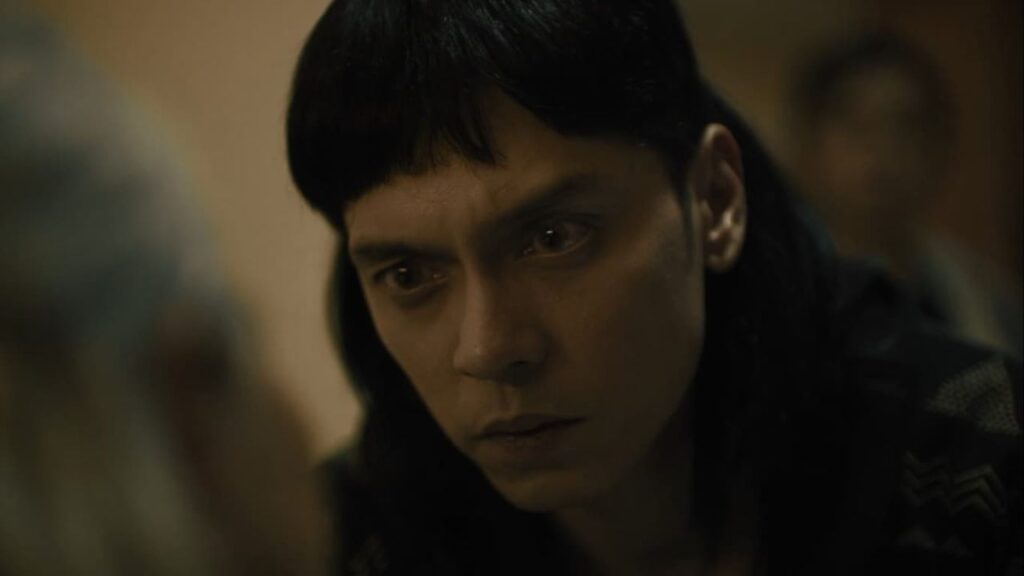
Carlo Aquino’s Matias is a complex vampire figure—neither the romanticized hero of Twilight nor the pure monster of traditional lore. Originally a warrior from 1570 who fought Spanish conquistadors before being turned, Matias represents centuries of Philippine history and resistance . His character struggles with his nature, attempting to control his bloodlust through arrangements with other vampires (trading marijuana for blood bags) while serving as Lilia’s perpetual guardian .
Key Scenes and Emotional Beats
The Childhood Connection
One of the film’s most poignant sequences shows young Lilia discovering Matias in his cat form during the Japanese occupation. Their initial bond establishes the foundation for a relationship that transcends conventional romance, built on mutual understanding and protection during turbulent historical moments .
The Assault and Its Aftermath
In 1954, when Lilia is sexually assaulted by locals, Matias takes violent revenge—an act that leads the community to brand Lilia as a witch and ultimately results in her mother’s suicide. This scene is crucial for understanding the social consequences of their relationship and the isolation Lilia endures to remain connected to Matias .
The Daylight Sacrifice
In the film’s powerful conclusion, after Lilia succumbs to her wounds, Matias makes the ultimate choice: rather than continue his immortal existence without her, he walks into sunlight, disintegrating as police officer Angua watches. This final act underscores the film’s central thesis—that without love and connection, even eternal life is meaningless .
Related Stories
The Diplomat Season 3: A Masterful Power Shift That Delivers Best Political Thriller Yet Stream or Skip?

Inside Furioza: A Descent into Darkness – A Deep Analysis Review Stream It or Skip It?
Themes and Symbolism: Beyond Supernatural Romance
Mortality as Gift
The most prominent theme in The Time That Remains is the value of mortal life. Unlike many vampire romances that portray immortality as desirable, the film consistently frames it as a curse. Matias’s long existence has been marked by loneliness and repetition, while Lilia’s finite life contains more genuine meaning and contentment .
Historical Trauma and Resistance
The film uses vampirism as a metaphor for colonial history, with Matias originally being turned during the Spanish colonization in 1570. His character becomes a symbol of Philippine resistance and resilience, with the vampire mythology blending with indigenous aswang folklore rather than adhering strictly to Western conventions .
The Burden of Protection
The relationship between Lilia and Matias explores the complex dynamics of protection and agency. While Matias consistently saves Lilia from physical harm, his interventions often lead to social isolation and trauma for her, raising questions about the costs of such protection and whether it ultimately serves Lilia’s best interests .
Content Advisory: Addressing the “Sex Scenes” Question
For viewers concerned about sexual content, The Time That Remains contains no explicit sex scenes. However, the film does deal with mature themes including:
- A sexual assault against Lilia (not graphically depicted but central to the plot)
- Domestic abuse during Lilia’s marriage
- Vampire-related violence and blood consumption
The film’s romantic elements focus on emotional connection and lifelong bonding rather than physical intimacy, with the most intense moments deriving from emotional sacrifice and the consequences of violence rather than sexual content .
Technical and Artistic Execution
Gothic Atmosphere with Filipino Sensibilities
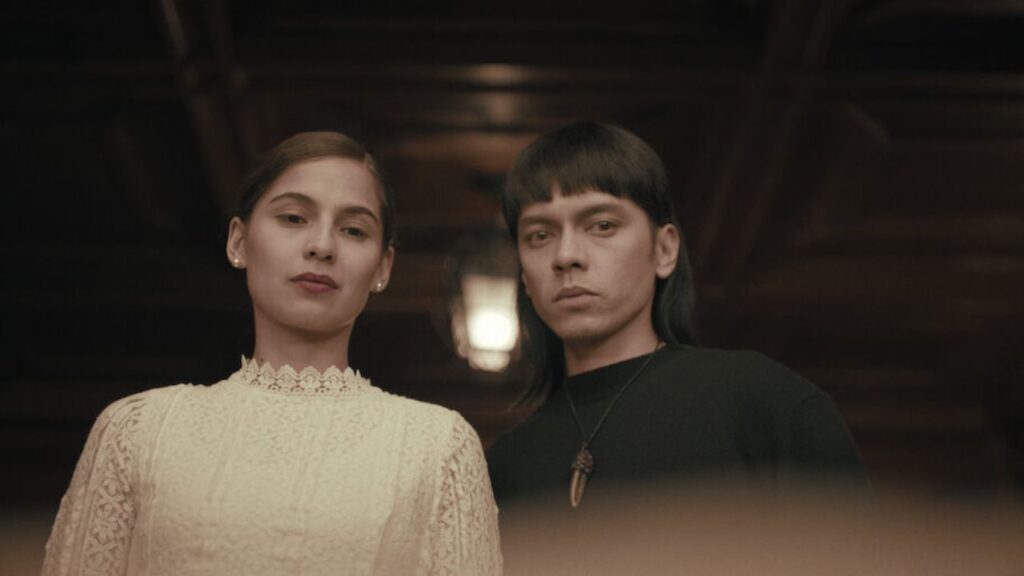
The film successfully creates a haunting, melancholic atmosphere through its cinematography and production design. The visual style blends traditional Gothic elements with distinct Filipino aesthetic sensibilities, particularly in its depiction of the Baguio setting and the historical periods Lilia recalls .
Pacing and Narrative Challenges
Where the film struggles is in its sometimes glacial pacing and uneven handling of its multiple themes. The ambitious attempt to comment on colonialism, Japanese occupation, modern drug trade, and eternal love sometimes results in a narrative that feels overstretched, with certain ideas not fully developed .
Performance Highlights
While the entire ensemble delivers solid performances, Bing Pimentel stands out as the elderly Lilia, bringing depth and authenticity to a woman reflecting on a life filled with both extraordinary love and profound loss. Her performance serves as the emotional anchor that makes the film’s philosophical themes feel personally resonant .
Final Verdict: Stream It or Skip It?
STREAM IT if…:
- You appreciate character-driven supernatural romances with emotional depth
- You’re interested in international interpretations of vampire mythology
- You enjoy Gothic storytelling with strong atmospheric elements
- You prefer romances that explore theoretical concepts about love and mortality
- You’re looking for a bittersweet, thoughtful viewing experience rather than light entertainment
SKIP IT if…:
- You prefer fast-paced, action-oriented vampire stories
- You’re seeking traditional romantic fantasy with unambiguous happy endings
- You’re sensitive to themes of sexual assault and domestic abuse
- You prefer straightforward narratives over non-linear storytelling
- You’re looking for horror elements or typical vampire action
We’ve shared our thoughts—now it’s your turn! Share your voice below
 Loading ...
The Bottom Line
The Time That Remains is a flawed but admirable addition to the vampire romance genre, distinguished by its Filipino perspective, strong central performances, and willingness to engage with substantial themes about love and mortality. While its pacing occasionally drags and its narrative ambition sometimes exceeds its grasp, the film ultimately delivers a powerful emotional impact that lingers after the credits roll .
For viewers tired of conventional supernatural romances and interested in international storytelling, this Netflix offering provides a fresh perspective on eternal questions about time, love, and what makes life worth living—even when faced with the possibility of eternity .
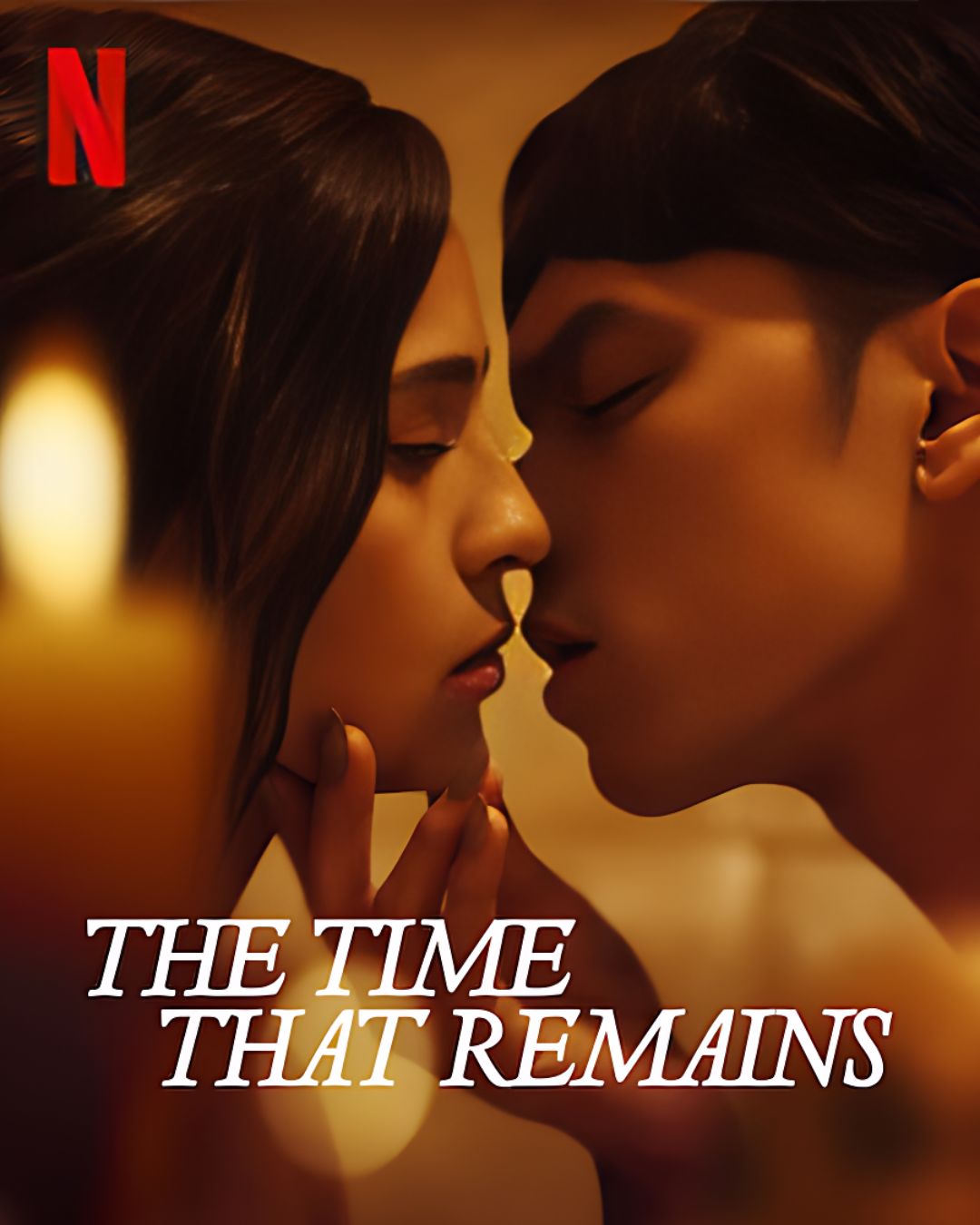
The Time that Remains
Our Rating:⭐3/5
Network Netflix
Genres: Filipino, Drama Movies, Romantic Movies
Release Date: October 16, 2025
Runtime: 1 h 49 min
Rate This Series
About The Author